
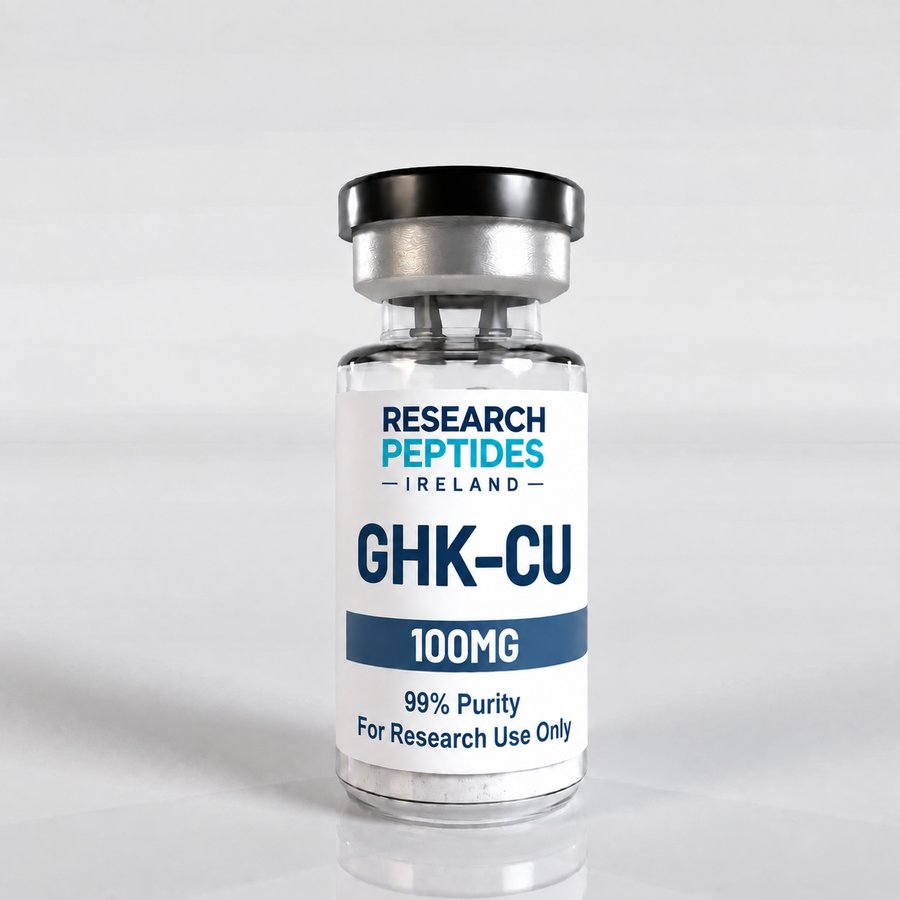
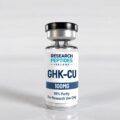
Buy GHK-Cu 100mg Ireland
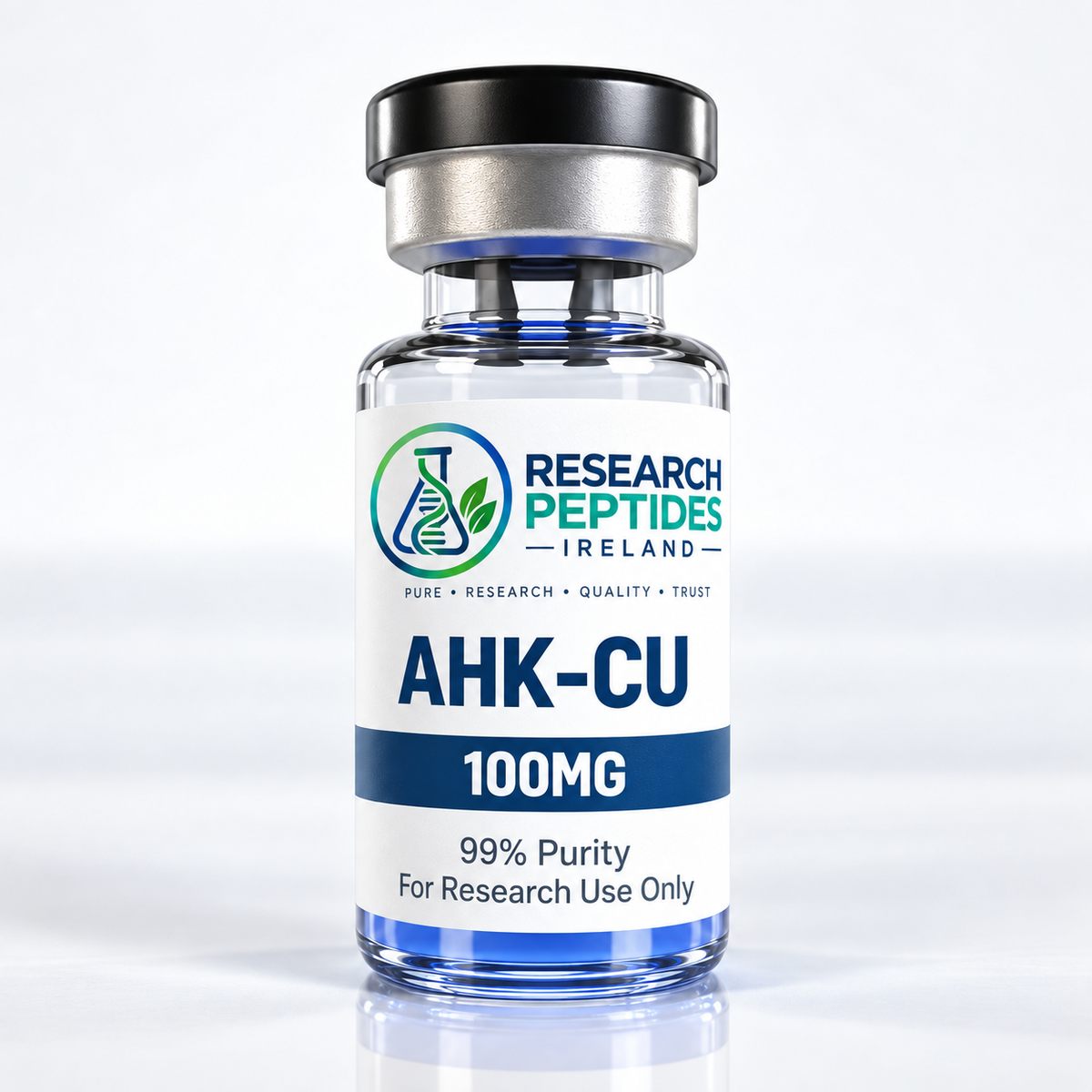
Buy GHK-Cu 100mg in Ireland for laboratory and scientific research. GHK-Cu, also known as Copper Tripeptide-1, copper peptide GHK-Cu, or prezatide copper, is a copper(II) complex of the tripeptide Gly-His-Lys (GHK). It is studied in copper-binding chemistry, metallopeptide research, cellular biology, molecular signalling, peptide characterization and other laboratory research areas. The commonly referenced 1:1 GHK-Cu complex is associated with CAS 89030-95-5 and a molecular mass around 402 g/mol, depending on the exact molecular form reported.
What Is GHK-Cu?
GHK-Cu is a copper-containing peptide complex formed from the three-amino-acid peptide glycyl-L-histidyl-L-lysine, commonly abbreviated as GHK.
The three amino acids are:
- Glycine (Gly)
- Histidine (His)
- Lysine (Lys)
GHK has a strong ability to coordinate with copper(II), creating the copper-peptide complex known as GHK-Cu.
This makes GHK-Cu different from copper-free GHK. In laboratory research, the distinction is important because the two materials have different molecular identities and analytical characteristics.
GHK-Cu 100mg Product Specifications
| Specification | Details |
|---|---|
| Product | GHK-Cu |
| Common name | Copper Tripeptide-1 |
| Alternative name | Prezatide Copper |
| Quantity | 100mg |
| Peptide | Gly-His-Lys |
| Peptide length | 3 amino acids |
| Metal | Copper(II) |
| Complex | GHK-Cu |
| CAS number | 89030-95-5 |
| Molecular formula | C14H22CuN6O4 |
| Molecular mass | Approximately 402 g/mol |
| Product type | Copper-containing research peptide |
| Physical form | Lyophilized research material |
| Intended use | Laboratory research only |
Current research-material references identify GHK-Cu as a copper(II) complex of Gly-His-Lys and commonly report CAS 89030-95-5. Molecular-mass values can differ slightly according to the exact ionic or salt form being reported.
GHK-Cu 100mg vs GHK-Cu 50mg
Research Peptides Ireland provides different quantities of GHK-Cu for researchers with different laboratory requirements.
The GHK-Cu 100mg format provides twice the quantity of the GHK-Cu 50mg format.
Researchers who require the smaller quantity can also explore our GHK-Cu 50mg product for the 50mg research format.
| Feature | GHK-Cu 50mg | GHK-Cu 100mg |
|---|---|---|
| Product | GHK-Cu | GHK-Cu |
| Quantity | 50mg | 100mg |
| Peptide | Gly-His-Lys | Gly-His-Lys |
| Copper | Cu(II) | Cu(II) |
| Research classification | Research material | Research material |
| Intended use | Laboratory research | Laboratory research |
GHK-Cu Peptide Structure
GHK-Cu is based on the short peptide sequence:
Gly-His-Lys
or simply:
GHK
Copper(II) coordinates with the peptide to form the copper-containing complex.
The histidine residue is particularly important to the coordination chemistry of the complex. Research into GHK-Cu has used analytical methods including spectroscopy, structural analysis and other techniques to investigate the interaction between the peptide and copper.
Because GHK-Cu is a metal-peptide complex, researchers interested in its molecular identity should distinguish it from the copper-free GHK tripeptide.
GHK-Cu vs GHK
GHK and GHK-Cu are related but different research materials.
| Feature | GHK | GHK-Cu |
|---|---|---|
| Name | Gly-His-Lys | Copper tripeptide-1 |
| Sequence | Gly-His-Lys | Gly-His-Lys coordinated with Cu(II) |
| Copper | No | Yes |
| Peptide length | 3 amino acids | 3 amino acids + copper complex |
| CAS | 49557-75-7 | 89030-95-5 |
| Molecular mass | ~340.38 g/mol | ~402 g/mol, depending on form |
| Research class | Tripeptide | Copper metallopeptide |
PubChem separately identifies copper-free glycyl-L-histidyl-L-lysine and copper-containing prezatide copper records.
GHK-Cu 100mg for Laboratory Research
The 100mg GHK-Cu format provides researchers with a defined quantity of copper tripeptide for laboratory investigations.
Potential research areas include:
- Copper-binding studies
- Metallopeptide chemistry
- Peptide structure research
- Molecular biology
- Cellular signalling
- Gene-expression research
- Oxidative-stress research
- Peptide characterization
- Analytical chemistry
- Comparative peptide research
The exact suitability of GHK-Cu depends on the laboratory model and research objective.
Copper-Binding Research
One of the defining characteristics of GHK-Cu is the interaction between the GHK peptide and copper(II).
Researchers can investigate:
Copper coordination
GHK-Cu provides a defined model for studying the coordination of copper ions by a short biological peptide.
Metallopeptide chemistry
The compound is useful for research into the behaviour of metal-containing peptides.
Molecular structure
Researchers can investigate how copper coordination affects peptide structure and molecular characteristics.
Analytical characterization
GHK-Cu can be examined using suitable chromatographic and spectrometric methods.
GHK-Cu and Cellular Research
GHK-Cu has attracted research interest because GHK is a naturally occurring peptide associated with biological systems.
Experimental research has investigated GHK and GHK-Cu in relation to areas such as:
- Cellular signalling
- Gene expression
- Oxidative stress
- Inflammatory pathways
- Extracellular matrix biology
- Cell-growth pathways
- Tissue-remodelling research
These remain areas of experimental and preclinical research rather than established therapeutic applications.
GHK-Cu and Molecular Signalling
Researchers have investigated GHK-Cu and related GHK biology in molecular and cellular models.
Research may examine relationships between GHK-Cu and:
- Gene-expression pathways
- Cellular stress responses
- Protein interactions
- Copper-dependent processes
- Extracellular matrix signalling
- Cellular remodelling pathways
This makes GHK-Cu relevant to researchers studying the intersection of peptide biology and copper biochemistry.
GHK-Cu 100mg Research Format
The 100mg format provides a larger quantity of GHK-Cu for laboratory research.
Compared with the 50mg format, the 100mg quantity can provide additional research material for laboratories conducting multiple analytical or experimental investigations.
Potential applications include:
- Peptide characterization
- Copper-complex research
- HPLC analysis
- Mass spectrometry
- Molecular studies
- Comparative research
- Cellular research
- Metallopeptide experiments
The product contains GHK-Cu as the copper-containing research material.
Quality Testing and COA
Quality documentation is an important part of selecting laboratory research materials.
Available documentation may include:
- Product identification
- Batch or lot number
- Quantity
- Purity
- HPLC testing
- Mass spectrometry
- Molecular identification
- Copper-composition information
- Testing date
- Product specifications
HPLC Testing
High-performance liquid chromatography can be used to examine chromatographic purity and related analytical characteristics.
Mass Spectrometry
Mass spectrometry can help confirm molecular identity and investigate the expected molecular mass of the copper-peptide complex.
For GHK-Cu, analytical information is particularly useful because different molecular, ionic and salt forms can produce slightly different reported molecular masses.
GHK-Cu Molecular Mass
The commonly reported 1:1 GHK-Cu complex is frequently listed at approximately 401.91 g/mol, while PubChem also records the charged prezatide copper species at 402.92 g/mol.
The difference reflects the particular molecular form being represented.
The copper-free GHK peptide is approximately 340.38 g/mol, making it important not to confuse the molecular mass of GHK with the copper-containing GHK-Cu complex.
GHK-Cu CAS Number
CAS 89030-95-5 is commonly associated with GHK-Cu, also known as copper tripeptide-1 or prezatide copper.
This identifier can be useful when searching scientific databases, comparing research materials and reviewing analytical documentation.
Storage and Handling
GHK-Cu should be stored and handled according to the product documentation and appropriate laboratory procedures.
Researchers should consider:
- Appropriate temperature conditions
- Protection from moisture
- Protection from direct light
- Keeping the container sealed
- Minimizing unnecessary environmental exposure
- Following appropriate laboratory safety procedures
Specific storage requirements should follow the documentation supplied with the product.
Why Buy GHK-Cu 100mg in Ireland?
Buying GHK-Cu 100mg in Ireland provides researchers with access to a defined copper tripeptide format for laboratory research.
Research Peptides Ireland provides product information covering:
- GHK-Cu identity
- Gly-His-Lys structure
- Copper-complex characteristics
- Molecular information
- Research applications
- Quantity
- Quality information
- Analytical testing
- Storage information
The 100mg format is designed for researchers who require a larger quantity of GHK-Cu research material.
GHK-Cu Ireland Delivery
GHK-Cu 100mg is available for customers in Ireland, subject to applicable laws and regulations.
Worldwide delivery may also be available where permitted by the destination country’s regulations concerning research peptides and laboratory materials.
Customers should ensure that research materials are permitted for their intended laboratory use and destination.
Buy GHK-Cu 100mg Ireland
If you are looking to buy GHK-Cu 100mg in Ireland, Research Peptides Ireland provides this copper-containing tripeptide in a defined 100mg research format.
GHK-Cu is based on the three-amino-acid peptide Gly-His-Lys coordinated with copper(II) and is studied in copper-binding chemistry, metallopeptide research, molecular biology and cellular research.
Researchers can review the product specifications, molecular information and available quality documentation before ordering.
GHK-Cu 100mg — research-grade copper tripeptide for laboratory research.
Research Use Only
GHK-Cu 100mg is supplied strictly for laboratory and scientific research.
It is not marketed as a medicine, dietary supplement or consumer health product.
This product page does not provide instructions for human administration, dosing or treatment.
Frequently Asked Questions
What is GHK-Cu?
GHK-Cu is a copper(II) complex based on the tripeptide glycyl-L-histidyl-L-lysine (Gly-His-Lys). It is also known as Copper Tripeptide-1 and prezatide copper.
What does GHK stand for?
GHK represents glycine, histidine and lysine.
What is the GHK-Cu sequence?
The peptide component has the sequence Gly-His-Lys, commonly abbreviated as GHK.
How much GHK-Cu is in this product?
This product contains 100mg of GHK-Cu.
What is the difference between GHK and GHK-Cu?
GHK is the copper-free Gly-His-Lys tripeptide. GHK-Cu is the copper-containing complex in which GHK coordinates with copper(II).
What is the molecular mass of GHK-Cu?
The commonly reported 1:1 GHK-Cu complex is approximately 401.91 g/mol, while the charged prezatide copper species listed by PubChem is 402.92 g/mol.
What is the CAS number for GHK-Cu?
The commonly associated CAS number is 89030-95-5.
What is GHK-Cu studied for?
GHK-Cu is studied in areas including copper coordination, metallopeptide chemistry, peptide characterization, cellular biology, molecular signalling and gene-expression research.
Is GHK-Cu the same as Copper Tripeptide-1?
Yes. Copper Tripeptide-1 is a commonly used name for GHK-Cu.
Is GHK-Cu available in Ireland?
Yes. GHK-Cu 100mg is available for laboratory research in Ireland, subject to applicable regulations.
Does GHK-Cu come with quality documentation?
Available product documentation may include batch information, purity data and analytical characterization such as HPLC and mass spectrometry.
Is GHK-Cu for human use?
No. This product is supplied strictly for laboratory research use and is not intended for human use or self-administration.

There are no reviews yet.